
Most of us picture Bible storytime as a straightforward thing: you open the book, you read the words, you close the book. But if you have sat down with a three- or four-year-old and tried that approach, you know what actually happens. Their eyes wander. They ask if the dog can listen too. They want to know what Noah had for breakfast. By the time you reach the end of a story they could not tell you what it was about.
That is not a problem with your child. That is a problem with the method. Young children do not absorb content passively. They need the right moment, the right words, and a question or two that invites them into the story rather than just receiving it. I have watched this play out with families in our congregation for years, and the ones whose children still quote scripture at twelve and fourteen are almost always the ones who did something small but deliberate in those early years.
The one children's Bible I recommend before any other step in this guide
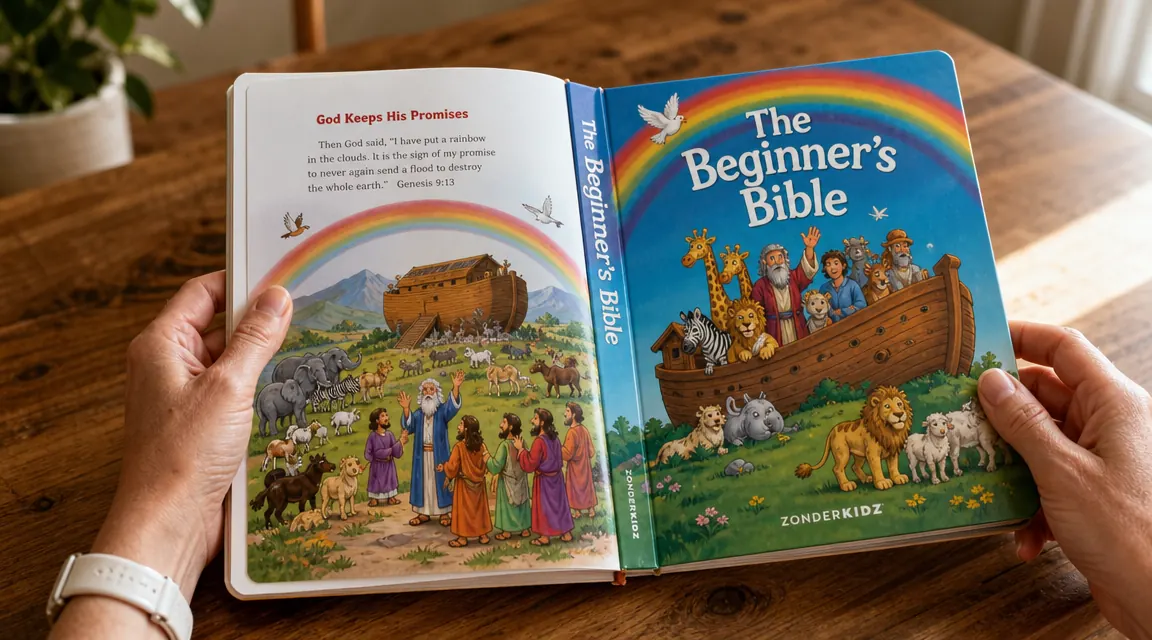
The Beginner's Bible by Zonderkidz covers 90 stories from Genesis through Revelation in language a two-year-old can follow and illustrations a ten-year-old still enjoys. With nearly 29,000 five-star reviews, it is the most widely trusted starting point for young children. Everything in this guide works best with a Bible that meets kids at their level. This one does.
Amazon Check Today's Price on Amazon →Step 1: Pick the Right Time of Day and Protect It
The single biggest factor in whether Bible stories stick is not which book you use or how dramatically you read. It is consistency of timing. Children's brains form habits around cues, and a cue repeated at the same time each day becomes a kind of anchor. When the anchor drops, their attention follows.
For most families the two windows that work are right after dinner and the ten minutes before lights-out. Dinner works because the family is already gathered and the room has a settled feeling. Bedtime works because the child is still and the story can transition naturally into prayer. The window that does not work, in my observation, is mid-morning when energy is high and distractions are everywhere. Save the active play for midday. Put scripture in the quiet.
Protect the window like you protect bathtime or meal prep. It does not need to be long. Ten to fifteen minutes is enough at ages two through six. What matters is that Tuesday feels like Monday and Wednesday feels like Tuesday. Predictability is the foundation everything else is built on.
Step 2: Choose an Age-Appropriate Translation or Storybook
This is where many well-meaning parents make a mistake that costs them months of engagement. They reach for the family heirloom King James Bible because it feels reverent, and then watch a four-year-old's face go blank at the word 'begat.' The language gap between a KJV text and a preschooler's vocabulary is genuinely too wide to bridge through force of will. You are not honoring scripture by using a translation your child cannot hear.
For children ages two through six, you want a dedicated Bible storybook that retells scripture in vocabulary the child already owns. The Beginner's Bible is the version I have recommended more times than any other. Zonderkidz has kept the theology accurate while stripping the language down to words a three-year-old speaks every day. The illustrations carry the story when the words land just above the child's reach. It covers 90 stories, which means you can read a different story every night for three months without repeating, and still have room to return to favorites.
Around ages seven to ten, you can transition toward an early reader Bible with shorter chapters and simpler prose. Ages eleven and up can often begin with an NIV or NLT text. But in the years this guide addresses, the storybook format is almost always the right call.
Step 3: Ask Simple Follow-Up Questions Before and After
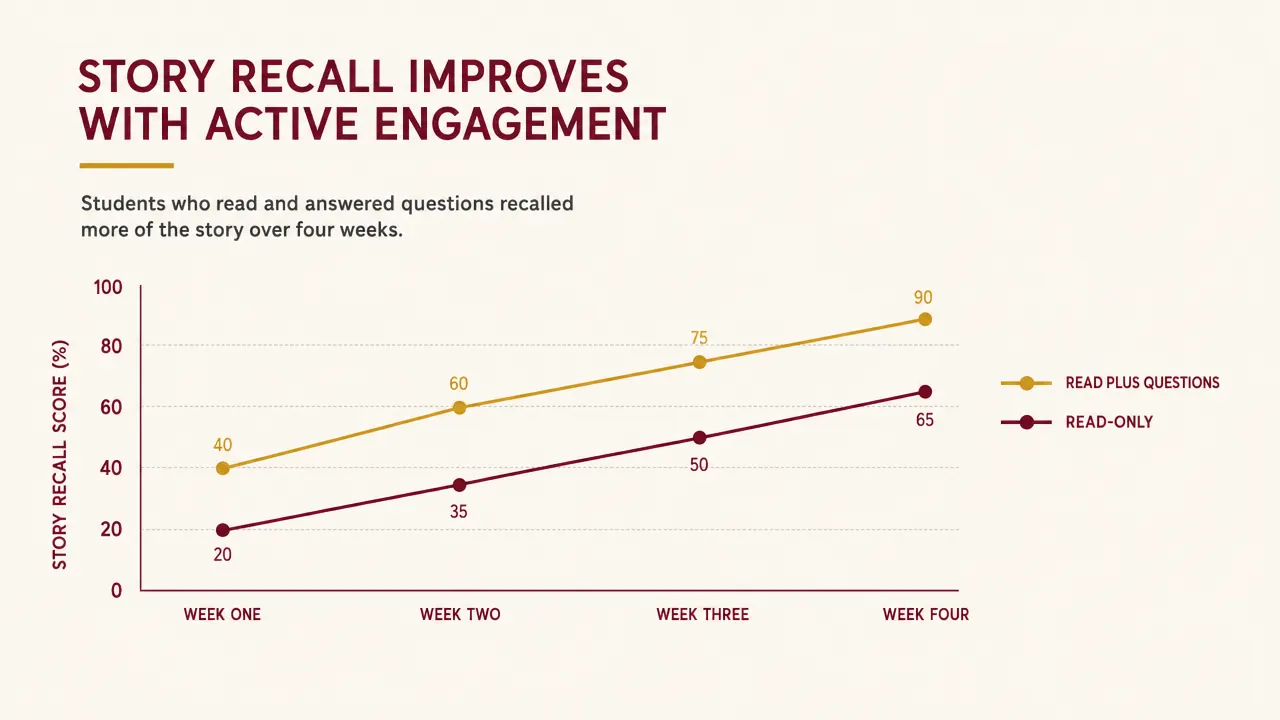
This is the step that separates the families whose children remember Bible stories from the ones who wonder why nothing seems to be landing. The research on early childhood memory is consistent: retrieval practice, meaning the act of pulling a memory back out rather than just putting it in, is what makes the memory durable. One question before the story and one after is all it takes.
Before you read, ask something like: 'Do you remember the man who built a really big boat? What was his name?' or 'Tonight we are going to hear about a very brave little boy. I wonder what you think brave looks like?' This primes the child to listen for something specific rather than floating through the story passively.
After you read, keep it simple. 'What was your favorite part?' works for ages two and three. 'Why do you think God asked Noah to build the ark?' works for ages four and five. 'What would you have done if you were in that story?' works well from about age six up. You are not quizzing them. You are giving them a reason to hold the story in their hands a moment longer before the night carries it away.
One question before the story and one after. That is the whole method. Everything else is just showing up.
Step 4: Handle Tough Stories With Honesty, Not Avoidance
If you read through a complete children's Bible, you will eventually land on stories that feel genuinely difficult to explain to a small child. The flood. Abraham and Isaac. David and Goliath. Jonah in the fish's belly for three days. Children who are four and five are not too young to encounter these stories. But they do need a parent who does not panic or skip past them with a vague 'that part is complicated.'
The most useful frame I have found is what I call the 'God was there' anchor. Whatever else happens in a hard story, you can always say: 'God was right there with that person the whole time. He knew how scared they were. And He had a plan.' That is theologically honest and emotionally accessible to a five-year-old. It does not require you to explain every detail of ancient covenant law or the full theology of sacrifice. It grounds the story in the one thing young children need to feel: God is present and God can be trusted.
If a child asks a question you genuinely do not know how to answer, say so. 'That is a really good question. I am not sure. Let's think about it together and maybe ask our pastor on Sunday.' Modeling honest curiosity about scripture is itself a form of faith formation.
Step 5: Build the Habit Over Four Weeks Until It Runs Itself
The first week will require deliberate effort. You will need to remember, plan, and occasionally override your own tiredness to open the book. The second week gets easier. By the fourth week, something shifts: your child will start asking for it. They will bring the book to you before you have remembered. They will hold their spot with a chubby finger and ask if it is story time yet. That is the moment the habit has set, and from there it largely sustains itself.
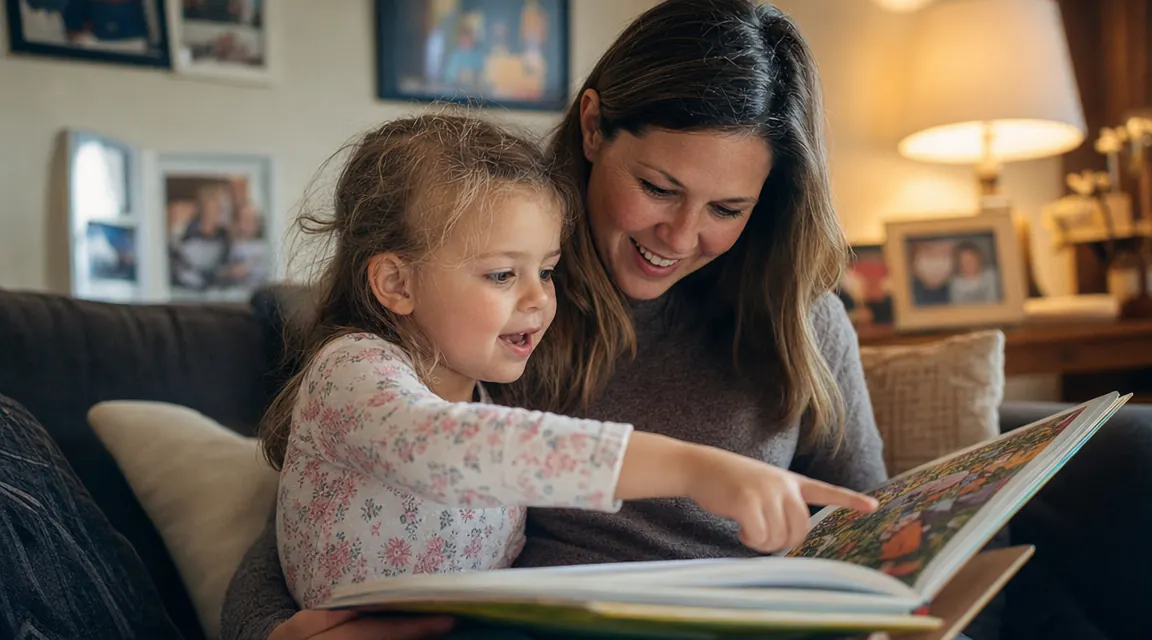
To get through those first four weeks, keep the friction as low as possible. Leave the Bible on the coffee table or the nightstand rather than on a shelf. Pick a story in advance so you are not flipping around looking for one when you are already tired. Let the child hold the book. Let them turn the pages. Let them point at the pictures during the story rather than requiring them to sit still and listen without touching. The more agency a small child feels during the reading, the more they invest in it.
Some nights you will only have five minutes and not fifteen. Read one page. Ask one question. That still counts. The habit is not about perfect execution. It is about showing up enough times that the child's internal calendar begins to expect it.
What Else Helps When You Are Getting Started
A few small additions can extend the impact of your reading routine without adding much time or effort. Prayer immediately after the story is the most powerful one. It does not need to be long. 'God, thank you for telling us about Noah. Help us to trust you like he did. Amen.' takes thirty seconds and weaves the story directly into the child's relationship with God rather than leaving it as information.
Drawing the story is another option that works particularly well for children between ages three and six who are visual processors. Keep a small notebook near the reading spot. After the story, ask the child to draw one thing they remember. You will be surprised how often they draw the detail that actually moved them, not the one you thought was most important. Those drawings also make a meaningful record to look back on when they are older.
Sunday morning reinforcement is worth mentioning too. When your child hears a story in Sunday School that matches one you have already read at home, they will recognize it. That recognition creates a feeling of competence and belonging in the faith community that is genuinely hard to build any other way. The repetition is not redundant. It is the point.
Start with the Bible that meets young children exactly where they are
The Beginner's Bible from Zonderkidz gives you 90 complete Bible stories in language children ages two through six can actually understand, paired with full-color illustrations that hold their attention from the first page to the last. It is the most reviewed children's Bible on Amazon for a reason. If you are going to build the habit described in this guide, this is the book to build it around.
Amazon Check Today's Price on Amazon →